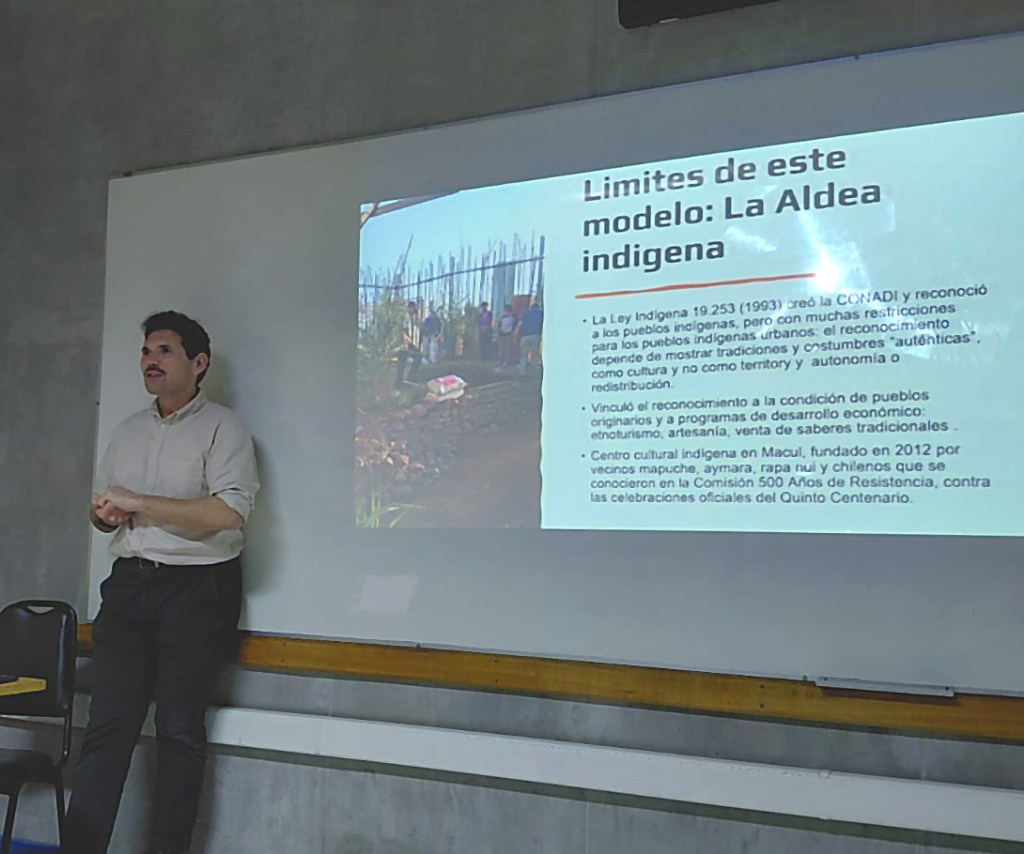
It is rare for me to discuss Spanish-language texts with my students, and rare to see how anthropological concepts travel across borders and get translated along the way. I had the pleasure of doing both as a guest lecturer for second-year psychology students at the Universidad Academia de Humanismo Cristiano (UAHC), founded as a space for academic freedom during the Pinochet dictatorship. In the courses Ética y Debates Contemporáneos and Territorialidades, I had students read Rita Segato’s “Antropología por demanda” (anthropology of the demand) alongside Edith Turner’s “There Are No Peripheries of Humanity,” before class discussions on ethnographic methods, alterity, and the ethics of extractive research.
Some students came from communities intimately familiar with the extractive research practices of “anthropologists and other friends,” and like Vine Deloria they were incisive critics of them. This discussion became the basis for exploring how ethnographic approaches to understanding difference and intercultural communication are relevant to their future careers in the behavioral sciences, and how they could respond to the questions posed by the people they will work with.
Many thanks to the students for their engagement, and to Cecilia Moreno Arredondo and Inti Lefort Valenzuela for the invitation.


Leave a Reply