Gendered Archives
This project examines the political aesthetics of democracy through the practice of arpilleras: embroidered tapestries produced by predominantly Mapuche and Chilean women in Santiago’s poblaciones from the Pinochet dictatorship to the present.
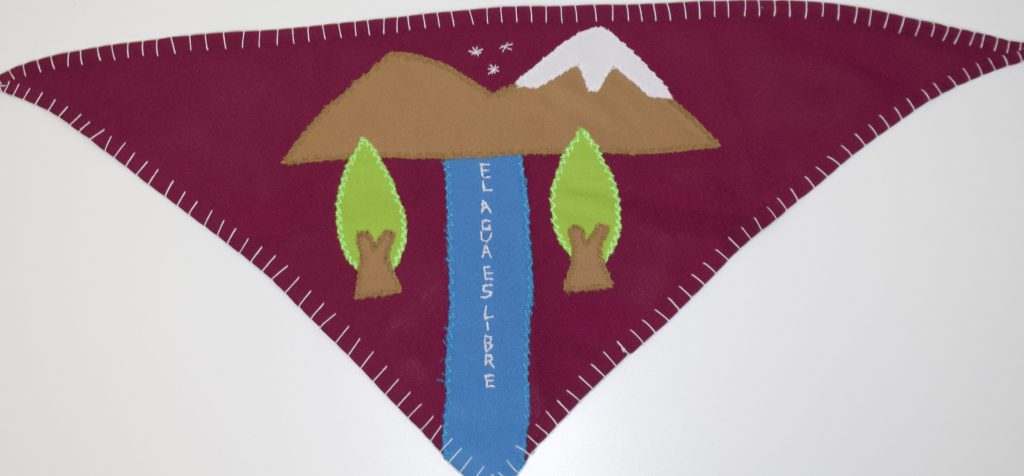
The ongoing reach of these solidarity campaigns can be traced in the international circulation of storytelling quilts (arpilleras), sewn by women’s groups in Santiago’s poblaciones. These works now form the basis of arpillera collections such as The Conflict Textiles Collection in Derry, North Ireland, and the Oshima Hakko Museum in Nagano, Japan. While earlier scholarship interprets arpilleras as visual testimonies of repression and human rights violations, this research proposes a different reading: arpilleras as a pedagogical practice that cultivates new sensorial and embodied aesthetics of democracy.
Based on ethnographic fieldwork with contemporary arpilleristas in Lo Hermida (2020–2023), the project examines how collective textile-making becomes a space for intergenerational learning, political reflection, and collaborative storytelling. Arpilleristas—primarily working-class women, many also Mapuche—have long navigated racialized marginalization as both urban poor and Indigenous residents. During the dictatorship, arpilleras rendered visible the silenced grief of the disappeared and circulated globally through human rights networks as material expressions of dissent. Today, their production articulates forms of decolonial pedagogy and collective care.
Through the practices of selecting themes, debating representations, and stitching narratives, arpilleristas cultivate collaborative forms of testimony and memory. Care operates across multiple registers: sustaining life through ollas comunes, circulating solidarity economies, demanding justice for the disappeared, and aesthetically reworking discarded materials into narratives of collective possibility. Although arpilleristas did not always identify their work as feminist, their collective labor politicizes care and makes women’s struggles visible.
By foregrounding arpilleras as exchanged material objects that mediate transnational solidarities and feminist pedagogies, this project situates textile-making within broader struggles for social justice and buen vivir. Arpilleras, in this sense, embody an otherwise democracy sustained through everyday acts of making, remembering, and imagining collective futures.
 Nikola Garcia Johnson