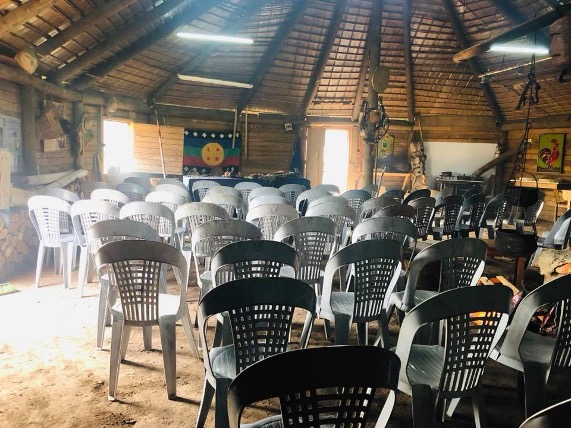
I recently contributed to PoLAR Online Emergent Conversation 27, edited by Jorge Rodríguez Solórzano, which brings together scholars working across the Americas to examine Indigenous politics, state relations, and populism. This conversation features contributions from Nohely Gúzman, Pablo Millalén and Daniel Gamez, Andrés Ramírez, Maria Violet Medina Quiscue, and Francisco Pulido.
The series explores several guiding questions:
- What happens to the notion of “the people” and popular sovereignty when we acknowledge that Indigenous polities demonstrate the impossibility of a homogeneous nation-state, a singular people, or a unitary sovereign?
- In what ways do seemingly progressive regimes incorporate or fail to include Indigenous perspectives in state policies, legal reforms, and government practices?
- How does thinking alongside Indigenous perspectives reshape how we conceptualize populism and popular mobilization in the Americas?
My contribution, “An Otherwise Democracy in the ‘Other’ Santiago de Chile,” examines how Indigenous organizations in Santiago cultivate democratic practices grounded in everyday forms of cooperation, care, and conviviality. The piece reflects on how these practices challenge dominant assumptions about populism, sovereignty, and political participation.
 Nikola Garcia Johnson
Leave a comment