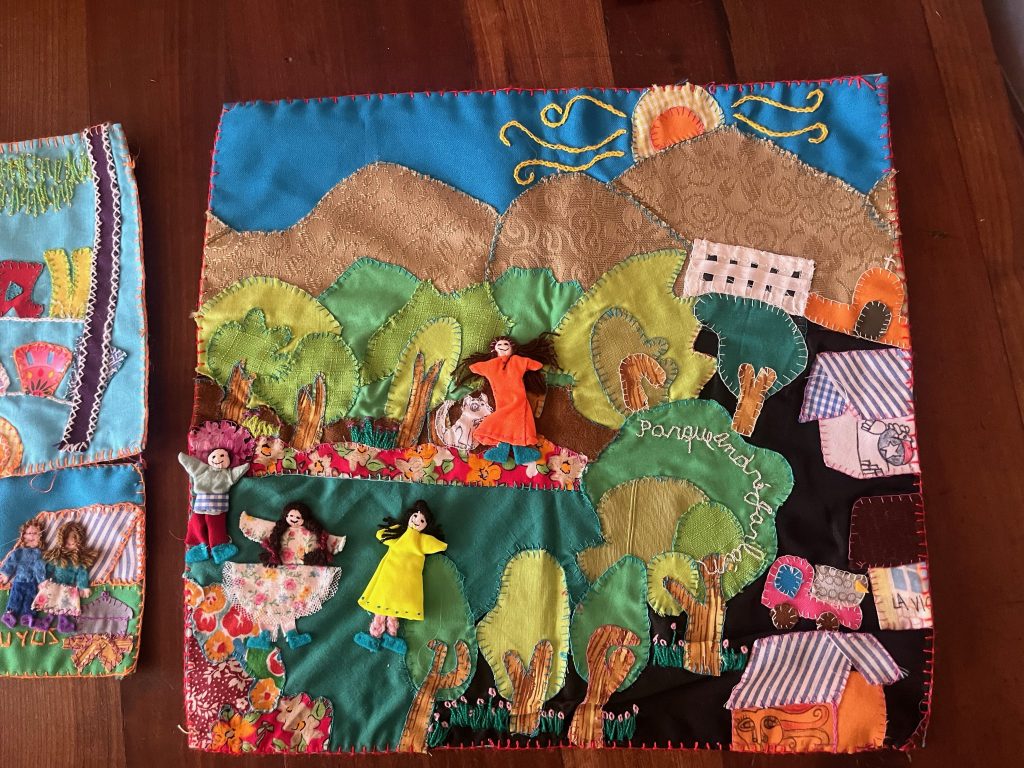
Earlier this month, I had the pleasure of meeting with Erika and Pamela from Memorarte Arpilleras Urbanas, a feminist textile collective that has run open workshops across Santiago, worked with neighborhood associations, collaborated with the Museo de la Memoria y los Derechos Humanos, and exhibited in the Conflict Textiles Collection in Ulster, Northern Ireland. Their work connects memory, care, and collective pedagogy through the practice of embroidery.
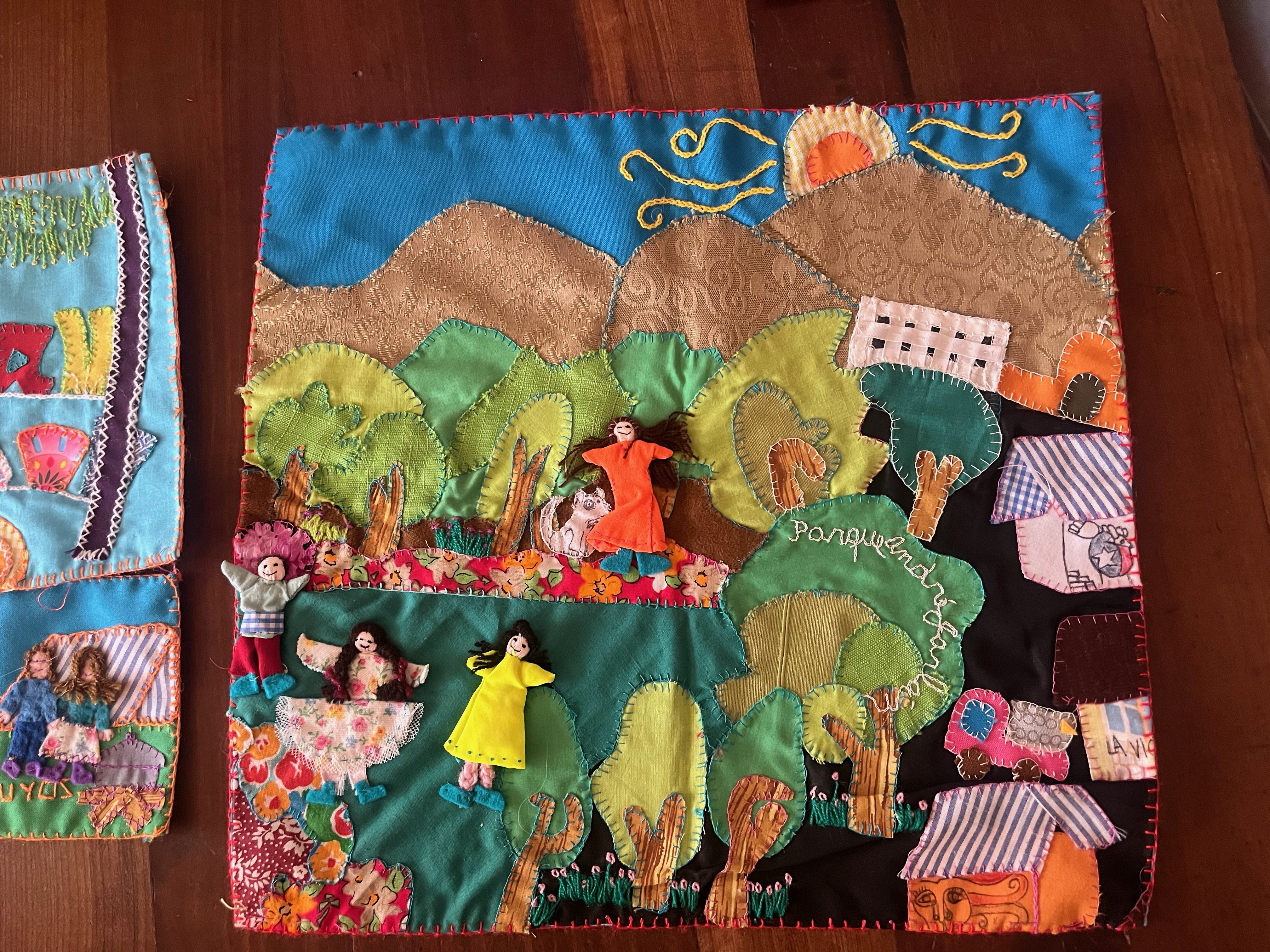
In our conversation, Erika recounted the story of one of their first arpillera workshops in Parque Andrés Hernández, named in honor of a French priest committed to social justice who was killed during the Pinochet dictatorship in the neighborhood. Years later, Erika stitched her first arpillera depicting the park and the collective’s first workshop. I was honored to be among the first researchers invited to see this early piece. Below is a photograph of Erika’s arpillera, resting on a dining room table where she and Pamela were working on new pieces.
Arpilleras — narrative textiles sewn from scraps of fabric — emerged in Chile during the 1970s as a genre of collective visual testimony under military rule. Created primarily by working class women in Chilean shantytowns, they denounced state violence and disappearance while also affirming community survival and everyday solidarity. Today, collectives like Memorarte continue and transform this legacy: using embroidery as a feminist practice of pedagogy and world-building that links personal experience to political struggle, and the past to the ongoing work of imagining a more just democracy.
This visit was part of my follow-up research while working on the manuscript for Emergent Citizenships, funded by the Wenner-Gren Foundation’s Hunt Postdoctoral Fellowship.
 Nikola Garcia Johnson
Leave a comment